
India had 2,07,135 DPIIT recognised startups on 31 December 2025, according to a
Ministry of Commerce and Industry reply published by PIB. Very few of them can justify a full finance department before Series B. That is why founders now compare virtual
CFO services India firms offer against a salaried team on cash discipline, not prestige. If you want to test that
comparison on your own numbers, talk to the JPKAD team before your next
board meeting. This article walks through the funding data, the cost logic and a simple way to decide what fits your
stage in 2027.
Key Takeaways
-
Late stage capital in India fell sharply in FY26 while early stage funding grew, so startups must stretch runway
further between rounds. -
Below Series B, most companies need senior finance judgment a few days a month, which is where virtual CFO services
India founders use fit best. -
Outsourced CFO services for startups in India in 2027 are likely to be judged on investor readiness, cash
forecasting and clean reporting.
The Funding Data Behind the Shift
Indian startup capital has not dried up, but it has become far more selective, and that changes how founders should
staff finance.
According to
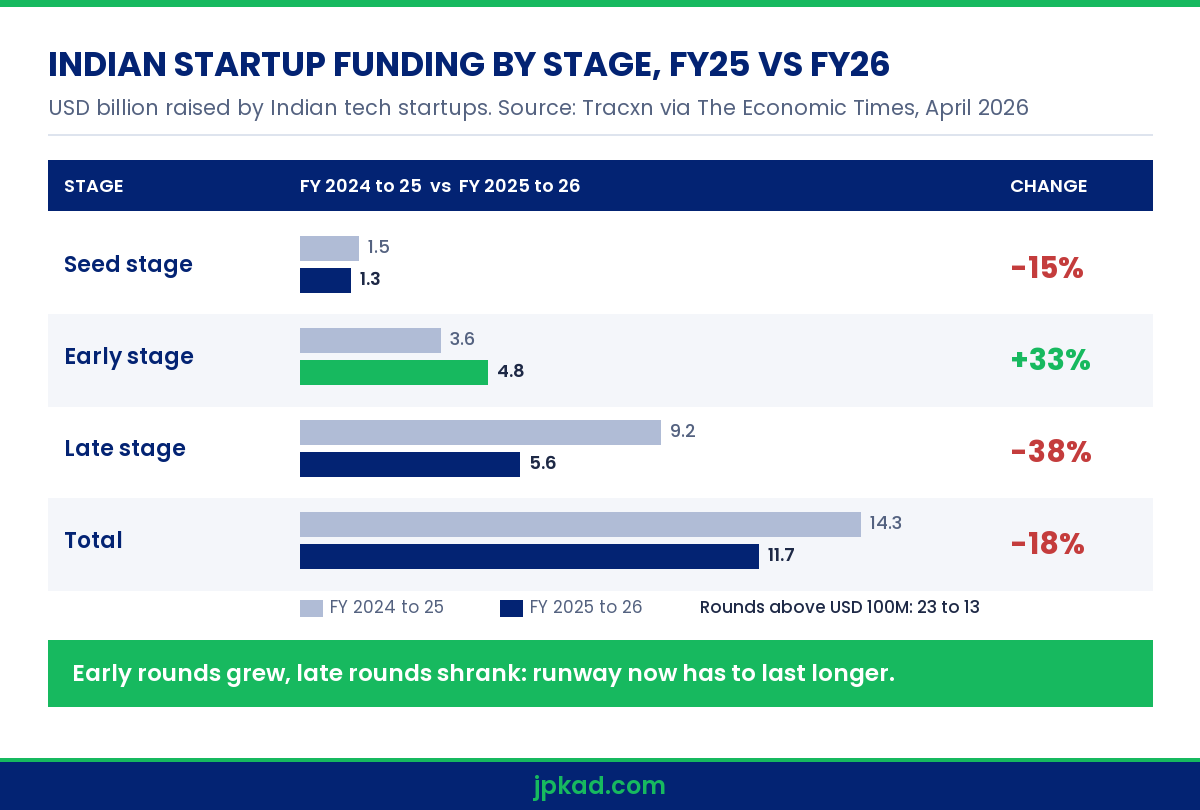
Tracxn data reported by The Economic Times, Indian tech startups raised USD 11.7 billion in FY 2025 to 26, down 18 per cent from USD 14.3 billion a year
earlier. Late stage funding fell 38 per cent to USD 5.6 billion. Early stage funding rose 33 per cent to USD 4.8
billion. Rounds above USD 100 million dropped from 23 to 13.
The
Bain India Venture Capital Report 2026
counts roughly USD 16 billion of VC and growth equity in calendar 2025, a second year of growth. Bain also points to
disciplined capital deployment and tighter governance. The two datasets measure different things, yet both say the
same thing to founders: money reaches companies with credible numbers, and the gap between early and late rounds is
getting longer.
The rise in early stage funding matters as much as the fall in late stage money. More companies are raising a Seed or
Series A round, yet fewer of them will find a large follow on round quickly. That leaves a growing group of startups
that must make one round last longer than they first planned. For these companies, every fixed cost on the payroll is
a question about runway.
Why In-House Finance Teams Struggle Below Series B
A full finance team is a fixed cost, while the finance work of an early startup arrives in bursts.
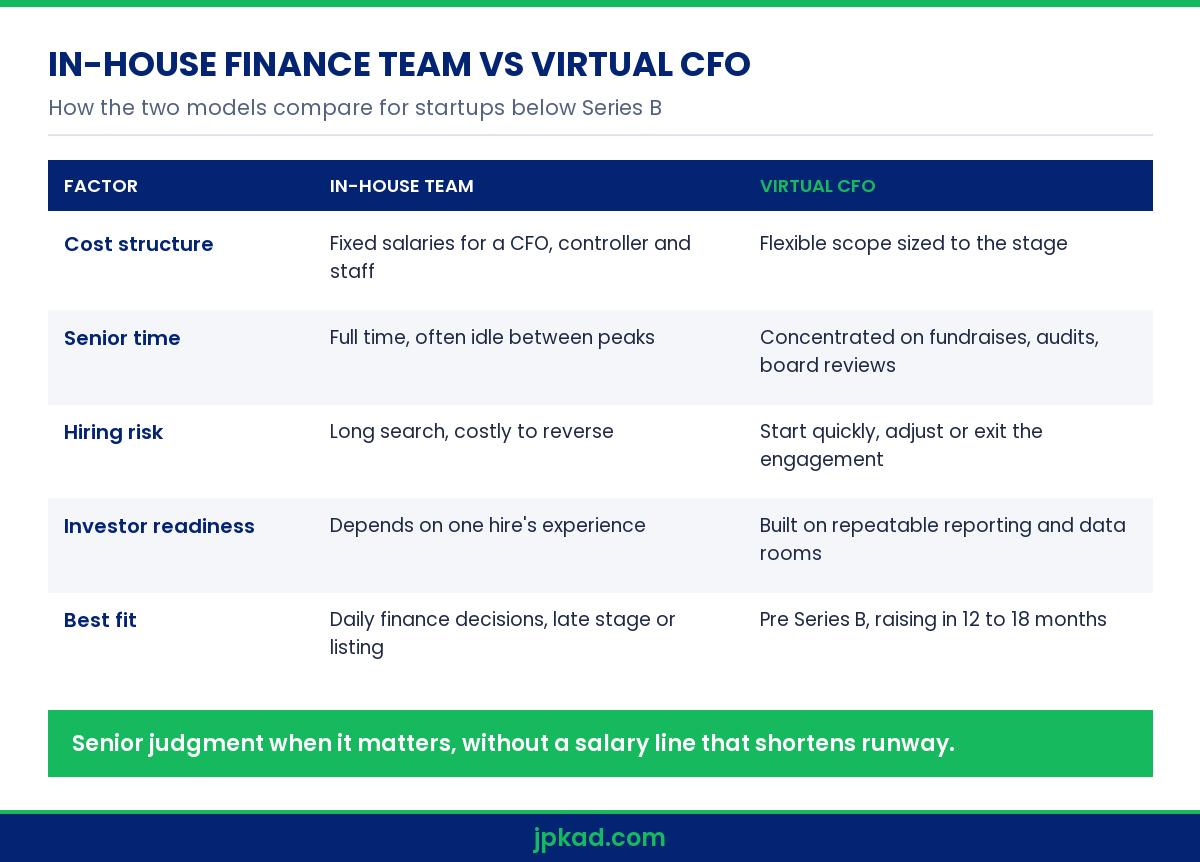
A typical pre Series B company does not need a chief financial officer every day. It needs one intensely during a
fundraise, an audit, a board review or a pricing decision, and much less in between. Building an in-house team to
cover those peaks means paying for senior capacity that sits idle most of the month.
The day to day work, such as recording transactions and reconciling accounts, is a different job altogether. That is
better handled by a reliable
bookkeeping and data entry process
than by an expensive executive. When founders mix the two roles, they usually end up with either a senior hire doing
clerical work or a junior team making strategic calls.
Virtual CFO services India startups adopt split these layers cleanly. Strategic oversight comes from an experienced
professional, while routine processing stays with a lean team or an outsourced partner. The result is senior judgment
when it matters, without a permanent salary line that shortens runway.
There is also a hiring risk to consider. Recruiting a senior finance leader takes time, and a wrong hire at this stage
is expensive to reverse. A flexible arrangement lets founders work with experienced professionals first, learn what
the business really needs, and decide later whether a permanent role is justified.
What a Virtual CFO Actually Covers for a Startup
The role is finance leadership on a flexible basis: owning the numbers, the cash and the decisions that depend on
them.
In practice, that covers four areas. First, cash forecasting, so founders see a shortfall months ahead rather than
weeks. Our guide on
how CFO support improves startup cash flow
explains this in detail. Second, unit economics and budgeting, so every hiring and marketing decision has a financial
case behind it.
Third, investor reporting. Board packs, monthly MIS and data rooms need to be consistent and defensible, and our note
on
investor grade board reports
shows what investors expect to see. Fourth, compliance oversight, keeping GST, TDS and company law calendars on track
without the founder chasing them.
A good engagement also builds the function underneath: processes, controls and systems that a future full time CFO can
inherit. That is the real test of virtual CFO services India founders pay for. The business should become more
capable, not more dependent.
The Global Capital Picture and the 2027 Outlook
Global venture money is concentrating, which raises the bar for every founder outside the largest markets.
Crunchbase data on 2026 funding
shows that U.S. companies captured nearly 80 per cent of global seed through growth stage financing so far this year.
Nearly 88 per cent of AI related startup funding, about USD 319 billion, went to U.S. headquartered companies, and
most of that went to just two recipients.
For Indian founders, the outlook for 2027 is a competitive one. Capital will still be available, but investors can
afford to be selective. Startups that present clean books, realistic forecasts and clear governance will move faster
through diligence. Those that cannot will spend months fixing numbers while competitors close rounds.
This is where virtual CFO services India companies use become a practical advantage rather than a cost. A seasoned
finance lead helps prepare the company for scrutiny before the term sheet arrives. Our article on
investment readiness for fundraising
sets out the groundwork investors usually check first.
How to Decide Whether a Virtual CFO Fits Your Stage
The right model depends on transaction volume, fundraising plans and how complex your compliance load has become.
A virtual CFO usually fits best if you are pre Series B, raising in the next 12 to 18 months, or reporting to a board
for the first time. It also fits if your cash runway is under two years, or if you operate across states or countries.
Founders who search for a virtual CFO consultant near me for SMEs are often looking for exactly this mix of local
compliance knowledge and senior strategic input.
An in-house CFO starts to make sense when finance decisions are daily, the team is large and the company is preparing
for a late stage round or a listing. Even then, many businesses keep outsourced support for specialist work such as
valuation or due diligence.
Before you choose a provider, ask four simple questions:
- Who will actually lead the engagement, and what is their experience with startups at your stage?
- How often will you receive a cash forecast and management report, and in what format?
- Will they prepare investor materials and support due diligence when you raise?
- How will they work with your bookkeeper, auditor and tax advisor so nothing falls between the gaps?
Clear answers to these questions separate genuine outsourced CFO services for startups in India from rebranded
accounting support. The best providers also tell you when you no longer need them.
JPKAD & Associates is a chartered accountancy firm based in Thrissur, Kerala, working with startups and growing
businesses across India and abroad. You can see
how our CFO engagements are structured
and judge whether the scope suits your stage.
Conclusion
Startup finance in 2027 rewards discipline. Late stage capital is scarcer, global money is concentrating and investors
want credible numbers earlier. For most companies below Series B, a full finance department is a heavy fixed cost for
work that arrives in bursts. Virtual CFO services India founders choose today give them senior judgment on cash,
reporting and fundraising without draining runway. If you are planning a raise or simply want tighter control of your
numbers, book a conversation with our advisors and map out the finance
support your next stage needs.